What is your plan? While running for Greenbrier County Commissioner, that is the most common question that is asked. Some in leadership or that want the role of county commissioner only have questions, Matt Ford is working on and implementing answers. He doesn’t have all of the answers, but he has the experience and relationships necessary to work toward solutions.
The following is a summary of the plan that Matt Ford has developed based on numerous community meetings, online survey results, discussions with local citizens, collaboration across the county, and experience as a multi-generational resident of Greenbrier County. With almost 32,000 residents and a land area of over 1,000 square miles, and 3 county commissioners; Greenbrier County needs a leader that knows how to work with the other commissioners, build a team, get input, and get things done. As the western Greenbrier representative, Matt Ford will be an advocate for the communities of Rainelle, Rupert, Smoot, Quinwood, and all points in between.
Early voting starts on April 29, 2026. You can vote early between April 29, 2026 and May 9, 2026 at the Rupert Community Building and the Greenbrier County Courthouse. Election day is May 12, 2026. Check your ballot at www.govotewv.com and vote Matt Ford for Greenbrier County Commissioner.
-
Our first responders need adequate resources to do the very important job of protecting all of us.
Funding for fire, EMS, and police services is a fundamental investment in public safety, community resilience, and quality of life. Key reasons funding is important. Investing in fire, EMS, and police services saves lives, protects property, strengthens community resilience, and promotes public trust. Reliable funding is not merely an expense but a necessary component of a safe, healthy, and functioning community.
Matt Ford will work with our first responders to organize efforts to increase efficiency among organizations and facilitate fundable grant applications.
-
When most people envision Greenbrier County, they think of rolling pasture land and wide open views. With more cattle than people, agriculture is big business in the Greenbrier Valley and all economic development efforts should coordinate with local farmers and ranchers to ensure that property rights are protected. The family farm is vital and something that we need to work to protect.
Farms and ranches sustain families, support local businesses, provide food and raw materials, and preserve open space and wildlife habitat across the county.
Economic importance
Jobs and income: Agriculture provides direct employment on farms and indirect jobs in processing, transportation, equipment sales, and veterinary services. Farm-related spending circulates through local businesses, helping stabilize the rural economy.
Tax base and land value: Productive farmland contributes to the county’s tax base while often remaining in lower-assessment classifications that help manage property tax burdens for farm families. Keeping land in agricultural use preserves long-term value and prevents hasty, expensive development.
Market diversity: Greenbrier County supports a mix of enterprises — livestock (including cattle and sheep), hay and forage production, row crops, specialty crops, and small-scale diversified farms. That diversity increases resilience against market swings and crop-specific challenges.
Cultural and community roles
Heritage and identity: Farming in Greenbrier County reflects generations of knowledge, family traditions, and a strong connection to the land. Agricultural events, fairs, and markets reinforce community ties and local pride.
Food security and local supply chains: Local farms supply fresh produce, meat, and dairy to county residents and surrounding regions, shortening supply chains and improving access to locally produced food.
Education and skills: Agriculture provides hands-on learning opportunities for youth and adults through 4-H, FFA, vocational programs, and apprenticeship-style knowledge transfer on family farms.
Environmental stewardship
Land conservation: Agricultural land helps maintain open space, scenic vistas, and the rural character that define Greenbrier County. Working lands can serve as buffers against unchecked development.
Habitat and biodiversity: Pastures, hedgerows, and riparian buffers on farms create habitat corridors for wildlife and pollinators, contributing to regional biodiversity.
Matt Ford will work with the Farm Bureau, Farmland Protection Board, and others in the agriculture community to get their input on ways to improve the agricultural economy in Greenbrier County.
-
The availability and affordability of housing is an issue across the county. In the western district, the average housing stock is well over 40 years old and what is available and livable is limited. Across the county housing prices continue to increase while the ability to construct new housing is restricted. The limited availability and high cost are a burden on existing families and a deterrent to people that would like to move to the area. Ultimately, this becomes an economic development issue as we look to attract and retain talent and investment in our area.
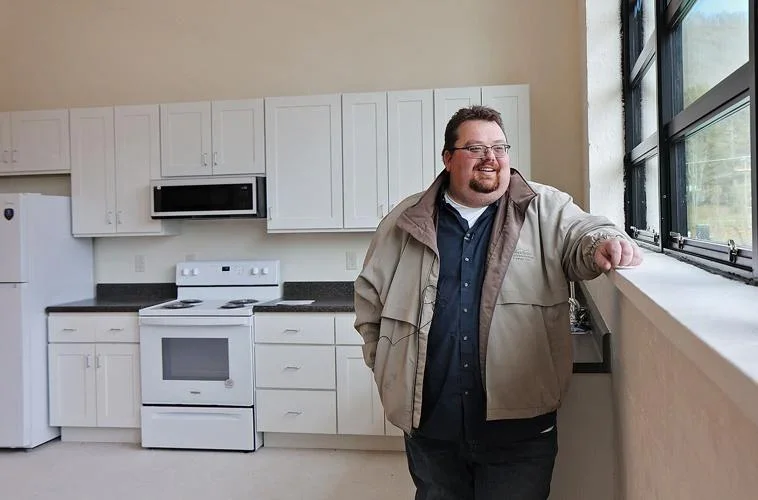
A mix of single-family and multi-family housing is needed. Matt Ford and the team at Meadow River Valley Association led the redevelopment of the former Rupert Elementary School into the Rupert School Apartments to construct 20 apartments. The project was primarily funded using tax credit financing that generated funds for the construction while facilitating economic development via the tax savings on other projects. This model needs replicated across the county to address increases available housing, address abandoned/empty buildings, and spur economic development.
Similar models can be used to develop multi-tenant, mixed-use housing in the available buildings across the county. Mixed use housing projects provide both commercial and residential space, so that we are providing housing options while giving those wanting to run a business a place to get started and grow.
The subdivision ordinance and available of water capacity is often discussed as limiting factors in housing development.
Since the county does not have a housing authority, Matt will continue to work with the Greenbrier Valley Economic Development Corporation, local builders, organizations such as Habitat for Humanity and the Greenbrier Valley Community Foundation, and others to assess the obstacles that hinder new home construction and find ways to lower housing costs.
-
Economic development in rural counties is difficult. We do not have all of the infrastructure, incentives, and population that large developers look for during site selection. We are competing against counties along the Ohio River that have large flat industrial sites with river, rail, and interstate access, as well as all of the available utility infrastructure. So, we have to set ourselves apart and make sure that we help to develop and retain small businesses, while continuing to work to attract large employers. We all want large employers, but 99.9% of all businesses in the United States are small businesses. According to the Small Business Administration (SBA), 98.8% of all businesses in West Virginia are small businesses.
In the western district, we are faced with the added complication that the industries that built the towns of Rainelle, Rupert, and Quinwood no longer support the towns that they created.
Matt Ford will focus on a multi-layer approach that combines traditional strategies with grass roots community driven efforts to bring economic development to Greenbrier County.
Greenbrier Valley Economic Development Corporation (GVEDC) is the lead economic development organization in Greenbrier County. Matt Ford has served as a board member and chairman of the board of directors representing western Greenbrier County. GVEDC has developed a strategic plan for economic development that includes small business retention and expansion, workforce development, affordable housing, industrial business attraction, etc. GVEDC makes the connection with state and federal level economic development entities, while providing workforce and small business training.
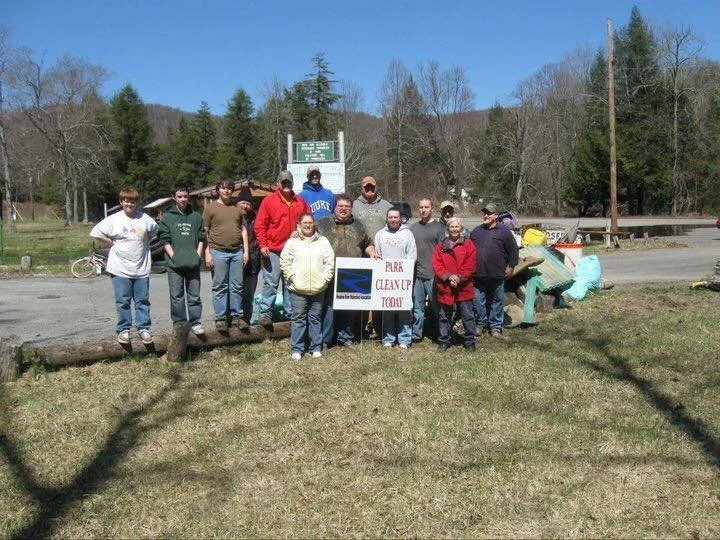
Meadow River Valley Association was formed in 2018 to work on community and economic development in the Meadow River Valley. The organization, led by Matt Ford, has contributed to community and economic development by restoring and maintaining the roadside park in Charmco and repurposing the former Rupert Elementary School.
The Meadow River Rail Trail, which Matt Ford has served as the project manager on for the Greenbrier and Fayette County Commissions, is bringing increased visitation. The opening of the Rainelle Trailhead in June of 2026 will facilitate the National Park Service in directing visitors to western Greenbrier County. Increased visitation increases the number of customers. Increasing the number of customers creates opportunities for small business development, repurposing of currently abandoned/empty buildings. It is the role of government to create opportunities; it is up to everyone to leverage those opportunities to create and support new businesses to capitalize on those opportunities. Matt Ford will help where he can to bring resources, training, and lead the way.
-
According to data provided by Experience Greenbrier Valley, in 2024 tourism generated approximately $417 in direct spending, $41.8M state and local taxes, and $128M in employment earnings in the Greenbrier Valley.
Greenbrier County is known for scenic views, outdoor recreation, and attractions such as The Greenbrier. There is no question that tourism needs to be a part of the economic development strategy in Greenbrier County. Tourism investment leads to increased hotel/motel tax, which increases the county’s ability to distribute Arts and Recreation grants throughout the county.
Matt Ford led development of the Adventure Meadow River outdoor recreation plan available for review at www.adventuremeadowriver.com. Matt is currently working with others involved in recreation projects throughout the county to develop a plan for advancing recreation tourism. This includes projects such as the Family Activity Center in White Sulphur Springs and trails in the Greenbrier State Forest, in addition to continuing development of the Meadow River Rail Trail. Matt Ford is also working with Backroads of Appalachia and others to promote motorized sports in the county, so that we have a diverse mix of motorized and non-motorized options.
Matt Ford will work with Experience Greenbrier Valley and others to market all that the Greenbrier and Meadow River Valleys have to offer.
-
Addiction has touched every corner of our county. It has strained our health and emergency services, increased demand for behavioral health and social supports, and contributed to higher rates of unemployment, homelessness, and involvement with the criminal justice system. Children of affected households experience instability that undermines their education and development. Local businesses face absenteeism and reduced productivity; first responders and medical staff carry the emotional and physical burden of repeated overdoses and crises.
Addressing addiction requires a coordinated, compassionate community response: expanded access to evidence-based treatment and recovery services, sustained prevention and education efforts, support for families and children, and resources for workforce reintegration.
Matt Ford will ensure that the county is partnering with organizations such a Seneca Mental Health, Seed Sower, God’s Way Home and others to facilitate treatment, as well as the providing support to the Greenbrier County Sherriff’s office.
-
The Greenbrier County Commission does not have purview over the schools in Greenbrier County. However, as a Greenbrier County Commissioner Matt Ford will continue efforts to partner with the education system to ensure that students have the opportunity to connect with businesses and learn how to start businesses of their own. Real world education and a connection to local businesses and the community is critical to retaining our young talent.
-
As a Greenbrier County Commissioner, Matt Ford will continue work on long-term flood recovery in Greenbrier County. He will also advocate for flood resiliency improvements.
One such project is the trestle near the sewer plant in Rainelle. Matt Ford will work with federal and state leadership to petition the owner to increase the water that can flow under the trestle and alleviate a bottleneck in the surface water drainage of Rainelle.
-
The Greenbrier County Commission does not have purview over the roads in Greenbrier County. However, as a Greenbrier County Commissioner Matt Ford will provide input to and partner with the West Virginia Department of Transportation, Division of Highways.
Do you have a question for Matt Ford, email him at mfordwv@gmail.com?